 TalkSold out
Design Thinking
Design Thinking: What It Is and Why It's So Important for Product Development
- Mon 5 Oct 2026
- 10:00
Temo K. DolidzeProduct design specialist, entrepreneur
About this workshop
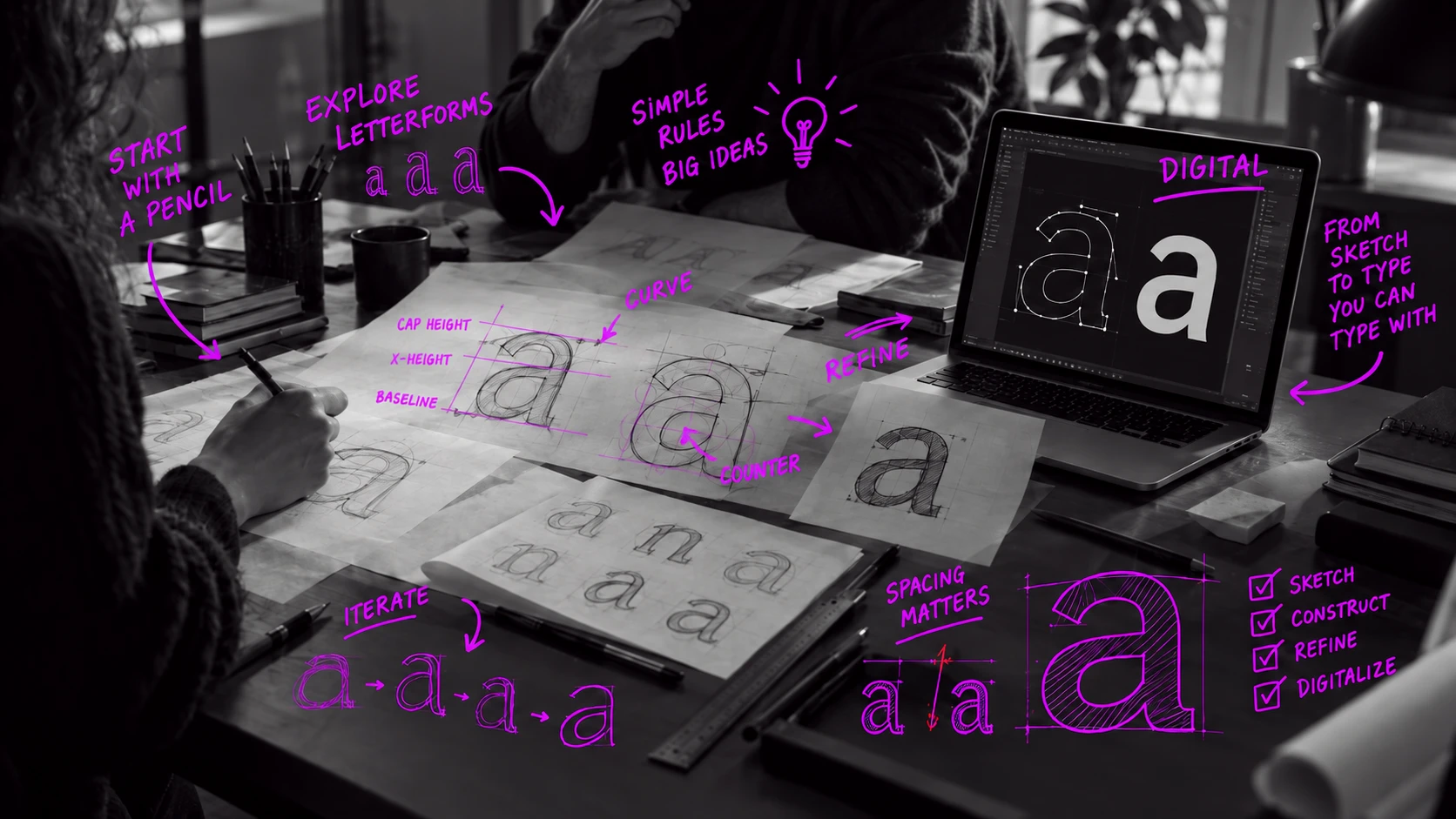
A hands-on workshop about where letters come from. Starting with pencil, paper and a few simple rules, we’ll look at how a typeface is planned, drawn and refined, then take a handful of letters from first sketch to a digital shape you can type with.
Every typeface starts as a set of decisions: how wide, how heavy, how the curves meet the straights. Working the way type designers do, we’ll make those decisions ourselves and see how small choices change the voice of a whole alphabet.
Who it’s for
Designers, illustrators, students and anyone curious about letters, including people who have never drawn one.
No lettering or type design experience needed. Bring pencils and patience; everything else is provided.
What you’ll explore
Stems, bowls, counters and serifs: the parts that make a letter readable, and why they look the way they do.
Draw a few key letters, like n, o, H and a, on a simple grid and see how proportion and contrast set the tone of a typeface.
Trace your best sketches into clean outlines and learn how curves are built from points and handles.
Put letters side by side, adjust the gaps and watch a word start to read as one shape.
End of day outcome
You’ll leave with a small set of your own letters, from first sketch to digital outline, and a sharper eye for the type you see every day.
About the mentor
In the world of product design, leading a team of specialists focused on design systems. The design freak deeply involved in arts, crafts, and the nuanced world of music and sound. An avid cyclist, I thrive on offroad and downhill challenges.
Come make it with us
Note
Keep exploring
TalkSold outDesign Thinking
 WorkshopSold out
Sound + Visual
 Workshop
Sound + Visual
Freeregistration required
Book a spot →